Wadded paperI’ve had people ask if I’m harder on the books small presses send me than I am ones where the author pays me. The answer: I’m harder on the author as a client.

Now, why is that, since the client usually pays more and is paying me directly? Simple. As an author, you expect certain things of the publisher from all but the smallest presses. This book should already be vetted. The publisher will likely flag any major issues. In one case, I had a tale with supernatural elements that probably should have had a developmental edit, but I was able to meet with the author in person. Going back and reading that book just as a reader, I now have a better understanding of what to ask and what to flag. (Plus, that guy sent me notes for the next one.)

So why be harder on the writer as a client? Simple. I write indie. So I know the writer chasing an agent or a publisher or even going indie is flying without a net. So my edits are going to be deeper. I’m going to cut (and add) more if I don’t think you’re getting your point across, and a bit less lenient on tangents. (I know. As an author, I love my tangents, too. Hurts to kill your darlings, but we can’t all be Stephen King. And even Steve and his editors cut a lot of stuff.) Why? There’s no one, except maybe beta readers, who will tell you when that pronoun should have been a name because you have more than two people in the same conversation. “He said…” Okay, if there are two hes in the conversation, which “he”? If it’s a man and a woman, and they’re the only two people in the conversation, then we’re fine. 

It’s the writer clients who get the long-winded explanations about drive-ups. I’m harder on run-ons with them. Most clients I get for copy editing are newer writers, so I need to help them put their best foot forward with an agent or an acquisitions editor. Yes, experienced writers break the rules, but we’ve been following them for years. So we know when coloring outside the lines looks artistic (We hope!) vs. looking like your two-year-old niece or nephew savaging a coloring book with whatever Crayola they grabbed first.

That’s not to say I don’t get some challenges from Down & Out or other publishers. My very first client I like to say has been doing this longer than I’ve been alive. And I’m just barely old enough to remember when Abbey Road was new. (I also was a toddler. Make of that what you will.) His original editor was Ruth Cavin at St. Martin’s Press, who is still considered a giant in the crime fiction field. My initial client’s manuscripts are not as clean as, say, Jim Fusilli’s, who writes for The Wall Street Journal. Editing Jim is basically moving commas around, half of which I’m pretty sure Jim stetted. The other client is used to pushing it to the deadline, so there’s an expectation (as expressed in feedback) that I’m going to have suggestions how to clean it up. So far, it works, and he’s put out some pretty good books since I started working with him.

And then we have the anthologies. Usually, they’re as much fun to edit as they are to write for. (Okay, I actually prefer writing for them. Less time, except less money.) But even that’s a challenge. Half of mine have Michael Bracken as the main editor, and Michael has sent me several “Go with God” emails after learning I got the copy edit assignment. Why? Short story author A will submit a story with almost no corrections. Yes, that actually happens. Author B can’t consistently capitalize or lower-case a proper noun. Author C is a lawyer. They capitalize EVERYTHING! (Sidenote: My last author was actually a district court judge. He did NOT capitalize everything.)

In the end, it’s what serves the reader best. Sometimes, I’ll leave an entire passage as nothing but sentence fragments because that’s how the author writes, and the reader will just get confused if I try to fix it. Plus, you try to fix every damn sentence in a book. Usually, by page 2, you have the writer’s rhythm and cadence. As an editor, don’t mess with it unless it’s unreadable. Because isn’t that why you hand off to an editor?
I’ve talked about the software tools I use to edit. ProWritingAid and PerfectIt are my go-to suites for copy editing. Story analysis and developmental editing, despite what OpenAI would have you believe, is very much a human art and has to be learned. By humans. Sorry, Sam. Good luck buying Twitter. (Like Sam Altman, I’m not holding my breath on that one.)

But software is not the only tool in the box. As I edit primarily books, it may surprise you to know some of my tools are… Well… Books. And the odd website, usually Wikipedia. More on that in a moment.

So what books do I recommend?

Chicago Manual of StyleThe Chicago Manual of Style – For US writers, this is the mack daddy. A fellow editor, newly minted, assumed I read the thing like you’d read any textbook. But we don’t read the dictionary or even peruse Wikipedia to absorb it. (The latter is constantly in flux, so that’s a fool’s errand.) No, CMOS, as it’s sometimes called, is a reference book. This is the baseline for writing in American English. There are UK and Canadian equivalents, so look for those. But you have the manual to look things up, it’s indispensable.

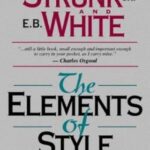
The Elements of StyleThe Elements of Style -Strunk & White’s treatise on the English language. Most of it is universal. It’s less a grammar book than a style book. Chicago is an encyclopedia. Elements is the quick-and-dirty. It’ll even tell you if you should hyphenate “quick-and-dirty” and when.


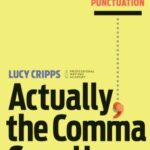
Actually, the Comma Goes HereActually, the Comma Goes Here by Lucy Cripps – This is a new addition. Like Elements, it’s a short, sweet guide to grammar I’ve started keeping handy as I work.


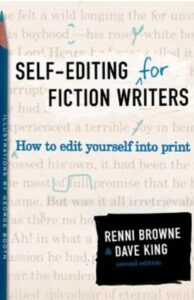
Self-Editing for Fiction WritersSelf Editing for Fiction Writers by Rennie Brown and Dave King – Out of print now, but you can find used copies pretty much anywhere online. (My plug for bookshop.org, the indie bookstore’s friend.) I got a copy years ago, and most of the writers I started out with still have their copy.


Websites

Wikipedia – When it first debuted, it was largely a copy of the 1911 version of Encyclopedia Britannica. “Wiki vandalism,” which I gleefully admit to provoking (Yes, I’m one of those who added “Born in Babylonia, moved to Arizona” to the Tutankhamun article. Wasn’t the first and definitely not the last), was a huge issue in the beginning. However, this non-profit operation has evolved. It’s well-policed and has become much more nuanced in its restrictions on how information is sourced. It’s great for fact checking and spellchecking brand names. And like you’re not supposed to city Britannica as a source, Wikipedia provides you the actual source for much of its information.

Duck Duck Go – Until recently, I swore by Google. And why not? For years, it was the gold standard of search. But like anything else, great brands and great products decline. Duck Duck Go is not only a secure, privacy focused search engine, it’s a great web browser to boot. Duck Duck Go’s search engine is as robust as Google’s and Microsoft’s Bing. I keep Chrome and Edge in case Duck Duck Go blocks or can’t reach something that’s needed, but that’s seldom a problem. 

Writing:

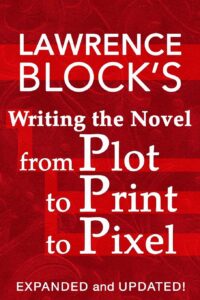
Writing the Novel (Updated version)Writing the Novel  by Lawrence Block – This is the book that taught me how to write a novel. A reread years later convinced me to switch from pantsing to plotting, but that’s a personal preference. Block even mentions the difference while describing a historical novel whose author basically shuffled his research cards into a certain order to make them a novel. That sounded to me, as it did to the great Block, a bit clumsy. His point was it worked for that writer. The book was a best seller. (It sounds like Michener. He was a researching fool, eventually employing teams of researchers to build his stories.) Block gives it to you straight, and from an age when word processors were not yet a thing.


On Writing by Stephen KingOn Writing by Stephen King – Not so much a how-to as  a how-I-do-it. King is an unrepentant pantser, but you can see that in how he structures stories. It’s also a memoir and, in the final section an editing guide. Like every writer and every editor, he has his pet peeve. His is adverbs, and he cheerfully admits he’s the worst offender. So noted. But not only should every writer read this, but it’s like spending time with a favorite uncle recounting his past.


Save the Cat – Blake Snyder – Take the Hero’s Journey and boil it down for screenwriters. Also useful for novelists. Save the cat is one of the goals of any story. How do you get to saving the cat in the end? Snyder, who sadly is no longer with us, also gave me one of my favorite tools for handling expository scenes that cannot be avoided: The Pope in the Pool. If you have a scene where people are talking about the story, but not much is happening, through something interesting into the scene. In one movie, an old man is swimming as a bunch of cardinals outline what’s happening. Gradually, you realize the guy in the pool is the Pope himself. I loved that passage of the book so much that, in one story, I named a character Pope, who forces business visitors to talk to him while he swims in his company-supplied pool. (He also dies there in another story, but that’s for the TS Substack.) 

Man runningApologies to Steve Perry

As a writer, I have a problem. And it’s one of my pet peeves as a writer.

Ever read a sentence that seems to go on forever? To the point where you forgot what the author was saying in the beginning? You’ve seen them, especially in first-person novels. The author starts out with one thought, then, through the magic of “and” or “but,” adds a related thought. Okay, all good so far. Then there’s another and/but or even just a comma. In most European languages, we are hard-wired to look for a period. The brain wants to move this out of short-term memory and into the neurological databanks. The longer it has to wait, the harder that gets.

Especially with today’s short attention spans. 

As writers, particularly newer writers, people tend to throw in as much detail as they can. In a rough draft, this is good. I know a few writers who’ve abandoned the idea of “drafts,” since 99% of everything is now electronic. The principle still holds. When you make revisions, you tend to cut more than add. Most of the early cutting comes from too much detail. Sometimes, this results in a run-on sentence. If anything prompts me, as a reader, to put down the book, it’s run-on sentences. As an editor?

Well, I’m gonna chop up that lengthy epic within a paragraph brutally. A lot of times, you’re trying to put in everything you think the reader needs. Or you go off on tangents, particularly if you’re pantsing. Or it’s all one big sentence in your head. A lot of run-ons could be broken up into paragraphs unto themselves. On occasion, I’ve been known to simply toss out a long one. That, of course, requires a comment explaining why I just tossed the author’s hard work into the recycle bin. It’s drifting into rewriting, and I will not do rewriting if I can avoid it. It’s seldom been done to me as a writer, and I think I owe my clients the same courtesy. Hence my rant a while back about editors bragging about cutting. It ain’t about you, Seamus.* 

Short stories provide the biggest challenge. You have a limited amount of space to convey information. Short stories are generally 1000-5000 words, with some longer but not by much. The temptation is to cram in as much information as you can, hoping the reader gets everything. It’s also where the most cutting occurs. In a short story, the fewer POVs, the less backstory, the fewer characters, the better. In a novel, you can wade in, take side trips, be as detailed as you want (within reason). The average novel these days in 90,000 words. Scifi novels regularly check in between 100K and 120K.  But a 5000 word short? There’s not only not much room for world building but none for run-ons.

But I’ve run on enough about that.

*Not an actual editor. The only Seamus I’ve ever known was my brother’s dog, who loved Pink Floyd for some reason.

Comic book swear wordIt’s no secret I have a love-hate relationship with my first novel. Published as James R. Winter (later shortened to “Jim Winter” because the former sounded pretentious), Northcoast Shakedown was published by a small press in 2005. Part of my ambivalence toward it comes from the press’s implosion. It cost me an agent (I should have waited three weeks), and pretty much pegged me as… Well, it didn’t do me any favors. But another problem: I did readings on the air a couple of times, and it was a pain in the ass to find a passage I could read without violating FCC regulations. 

That’s right. I wanted my writing to sound tough, and so 90% of the pages had the ever-dreaded, ever-popular F bomb on it. The follow-up, Second Hand Goods, had no such problem. Bad Religion would have been right at home in today’s thriller environment. And Road Rules, my Elmore Leonardesqe caper, suffered only from being too short. But NCS, as I’ve shorthanded it over the years?

Yeah, try standing up in front of a bookstore crowd and reading that when you’re parked next to the kids’ section. Not happening.

But how do we handle language? And as an editor, how do I deal with swearing?

Well, first of all, the author needs to deal with that at the developmental stage. If they do it themselves, great. That means they put some thought in their story before tossing it over my transom for clean up. I’ve flagged spellings of swear words. Every editing tool I’ve seen wants “son of a bitch” written as one word if it’s not spread out as a phrase. However, while I seldom see it these days, “sumbitch” is also common, and I have to smack the tool’s hand for getting in my way. The oddest one, though I’ve seen it three or four times in projects, is “sunuvabitch,” or some variation on that. But you probably read that with no problem. There were a couple of authors who wrote it in such a way that I had to sound it out every time. Now you’ve crossed from giving your editor pause to giving your reader permission to put the book down and not finish. The reader is all, and thou wilt consider thy reader in all things, world without end. (Maybe I need to quit watching Shakespeare and RobWords. That’s another post.)

And to that point, how do we handle swearing? There are multiple schools of thought on that. Some say swearing conveys a lack of intelligence. Others say those who swear tend to be smarter. Neither is true. It’s all preference. But tell that to the reader who wants all her romance novels to sound like Hallmark, where it’s Christmas all year long, and Lacey Chabert solves more crimes than the NYPD Homicide Unit. She wants no swearing in her stories. On the other hand, we have the gent who wants all his stories to feature six-foot-four manly men as protagonists as they rip aliens apart bare-handed and drink gallons of whiskey to shake off their exertions. Swearing is not optional. It’s a requirement. So, how to communicate that to a reader without slapping a trigger warning on it. (The fewer, the better. Look at movie ratings. Those of you who still go to movies.) 

I recommend putting your first swear word in the first two or three pages. As readers tend to skim, they look for things: White space, what is referenced, how graphic or genteel, and yes, language. It doesn’t have to be an F bomb. In fact, if my characters’ language is coarse, I, as a writer, do an F bomb check. Author Marcus Sakey once told me he took out one out of every three. I can see two out of three. When it’s seldom used, you have to think about it in the writing. When I wrote Second Wave, I abandoned the conceit this was a YA series. The character of JT and his companions have disobeyed orders and joined a mission to reach a fallen starship. The mission’s leader, Suicide, is angry and says, “Fuck your loss, little boy! We all lost people!” (I’m doing this from memory, so I may have added exclamation points. I use them, but I’m not a fan.) This was not only war, but JT was mere weeks beyond qualifying as a child soldier, and his companions were child soldiers. Politeness went right out the window. Plus, Suicide is a war veteran who lost one spouse in battle and another to a terrorist bombing. She’s not going to talk to him like an Asian Mr. Rogers.

In the scene where that occurs, context carries the meaning. Already, several of Suicide’s more questionable subordinates demonstrate why they were considered war criminals in the previous major conflict. By the time she loses her temper with JT, it doesn’t matter. But what about crime fiction?

Police and criminals can get pretty salty. I know crime authors who believe you can avoid it in dialog, but anyone who’s ever been in a tense situation knows that doesn’t really happen in real life. On the other hand, Law & Order avoids it while The Wire had one seen where the dialog consisted entirely of F Bombs. One is on broadcast, the other on HBO. As always, know thy reader, thy audience, and thy platform. And quit using “thy” like it makes you sound smarter. 

What about slurs? They exist, and people use them. They can convey a person’s prejudices. But they can also throw a reader out of a story. When I’ve had to write them, I’ve often cringed. It should be obvious this character either lived in a certain environment or was bigoted. Still, too many people conflate the author with their characters. Unfortunately, like singers, actors, and even artists, a writer is performing for an audience. If you want to keep an audience, you have to be aware of the consequences. People are under no obligation to like you, so give them a reason to like you.