
Wadded paperRegular readers of this space know I have a…complicated…history with my high school English teachers. As my college degrees are technical and business (and I was a non-traditional student), I can’t say the same for my college-level profs. One was a young, tatted-up lady who prompted me to rewrite Poe’s “A Cask of Amatillado” from the point-of-view of whoever the crazy old man was ranting to. I miss her.

What don’t I miss? Latin rules imposed on English. If you follow the YouTube channel RobWords, you know host Rob Watts is annoyed by Latin scholars in the late Renaissance and the Enlightenment showing off and trying to impose their rules on this Germanic language called English. There are two rules that really grate, not just on Mr. Watts, but your humble narrator, too. 

Never end a sentence in a preposition.

Never split an infinitive.

Let’s take the first. There is an old joke about a student of humble origins attending Harvard and needing to find the library. He stops a fellow student, probably with three last names like Thatcher Baxter Hatcher, and asks in all earnestness, “Where’s the library at?” Thatcher Baxter Hatcher, all offended and Thurston Howell III accent in place, sniffs, “This is Harvard, young man, and we do not end sentences in a preposition!” Undeterred, our hero rephrases his question as, “Where’s the library at, motherf–?”

The truth is Shakespeare ended sentences in prepositions. So did Mark Twain, and not just when he wrote from Huck Finn’s point-of-view. So did Hemingway. And… Stephen King? That last one’s a bad example. King famously derides adverbs, then uses them like Frank’s Red Hot, putting that sh– on everything! So why is this taught in schools?

Because… Latin. Having taken a few years of high school Spanish, most of which I’ve forgotten, I’ve seen the Latin rules in action. Spanish, French, Italian, Portuguese, and related languages are continuations of Latin, so the rules apply seamlessly. And in Spanish, you can’t end a sentence in a preposition. Structurally, it won’t work. It wouldn’t make sense. English?

A friend from Germany said when he learned English, he was stunned to learn you could “verb” a noun, or even noun a verb. In fact, our most potent obscenity (Rendered here as “eff”) is so versatile that the sentence, “This effing effer’s effed!” makes absolutely perfect sense. English, for all its inconsistencies and contradictions, is structured so any word can mean anything, and the listener can easily catch the meaning. Putting a preposition at the end of a sentence? The main objection is there’s no object following the word, but if I ask you if you know where the library’s at, unless you’re Thatcher Baxter Hatcher, your first response is likely to be, “Up on Galbraith Road, near the Walgreen’s.”

That said, I had it flagged in a manuscript once. The editor said she hates that rule, too, but it’s so ingrained into our psyches that readers might stumble over a dangling preposition.

Split infinitives. To boldly impose Latin rules that make absolutely no sense in English. And you may thank Gene Roddenberry and William Shatner for debunking this one. “To boldly go where no one has gone before.” To go boldly sounds awful. But why is this  a rule? It’s not. Once again, Latin scholars had an annoying tendency to impose their rules on a Germanic language. Again, let’s look at the Latin-based Spanish. Infinitives, the base version (allegedly) of any verb, are always one word in Latin-based languages. You can’t split a Latin or Latin-based infinitives. They are always one world. English?

“To boldly go…” Right there, the myth is busted.

And yet, I’ve actually seen someone put this linguistic myth, up with which I will not put, to productive use. General Colin Powell talked about how he barred his staff from using split infinitives in all memos. Powell said he was well aware that was a stupid rule and even quoted Star Trek in explanation. His point was making his staff focus on details. In looking for the banned split infinitives, they found other errors. So it was about seeing details.

But understand something. Anglo-Saxon, which does have a handful of Latin constructions in its earliest forms, is not Latin. Most of the structure–good, bad, and ugly–came from that. There are Latin-based words in English. From Middle English onward, it’s lousy with French words and had already absorbed a fair amount of Viking and Celtic words. But it is not Latin. 

mandalorian but its just kuiil saying "i have spoken" - YouTube
Source: Disney

Wadded paper“We’re developing a situation where a whole group of young people is growing up having no real sense about how our system of justice works.” – Chief Justice John Roberts

That line’s been quoted in several news sources and is included in a lot of Facebook rants about the Supreme Court’s performance of late. Without getting into what I think of the current Court, I do want to point out this showed up in someone’s latest rant. Before launching into why the poster thought Roberts was out of line, he stated even the grammar is wrong.

This is an editing blog. Did you think I was going to waste space on the undeserving crooks in Washington? Specifically, he said it should have been “a whole group of young people are…” instead of “is.” Actually, the poster is wrong. But you can’t fault him. The sentence looks wrong. It has “people” and “is” next to each other in the sentence. But “people” is not the operative word. “Group” is. And group, by definition, is a singular object. The members of a group are plural. And “people,” in most cases, is plural. But the subject of the clause is “group.” Therefore, the correct verb is… Well, is.

Bill Clinton must feel vindicated. (Google it. I remember that incident, and I’m still scratching my head.)

Roberts is, before anything else, a lawyer. I learned to edit from a lawyer, and believe me, it’s a great way to learn how to clean up your prose. However, the law has its own quirks and sticks to rules even corporate writing no longer recognizes. Like capitalizing every other noun in a sentence and not using contractions outside of quotations. I’ve had one editor flag that in my manuscript and stetted the hell out of it. But the bottom line is lawyers almost always get their grammar correct. So while it took me a decade to shed the legal habits of editing, the core of what I learned remains.

So why bring this up? Well, first, I needed a topic this week. And odd noun-verb pairings seemed obvious when I read the chief justice’s quote. Yes, they slip by sometimes when I edit. One could make a case for AI taking over the job, but having had some recent experience with ChatGPT for a project, make sure you stamp your passport for the frying pan on your way to the fire. AI is worse at it. Go Google “Hallucinations” and “AI.” Some of the results are hilarious.

But why is this so hard? Your brain sees “people” right next to the word “is” and goes, “That ain’t right.” But before “people” in the above quote is “group.” The group is growing up, but the people aren’t. “People” is only a descriptive noun telling the reader what group this is. So do I ever let this slide knowing the right way will hurt some people’s heads? Yes, actually. 

A good editor can forgive a lot of rule-breaking in dialog and first-person. The person is talking, and I don’t give a damn what your English teacher told you (unless it was Mr. Murphy, whom I had in the 11th grade. He was cool!) People break rules speaking. They mismatch tenses. They swallow words and syllables. They use the wrong words. They even use the same word to start too many consecutive sentences. Your goal is to make it readable, not please Mrs. Chaucer (not her real name, but suck it, Clara.)  

But once in a while, the right way is going to sound wrong. Leave that to third person narrative. (Send me second person, and I’ll print it out, shred it, and send back the shreds. I am not an avant-garde editor.)

Sentence fragments. Annoy some people. Found in Dickens, though. Bad writing? Or stylistic choice?

Why not both? Girl meme social reaction | StareCat.com

It’s both. My current assignment comes from a writer who breaks a lot of rules. And it’s clearly done on purpose. He writes present tense, which drives a lot of readers batty. And he writes almost completely in sentence fragments, especially when his story gets going.

“Wow, TS. It must take you an hour just to get through one page!”

Not really. The point of editing is to make sure the writer not only gets their point across but also doesn’t get in their own way. In other words, cutting out all the writing for the sake of writing. Mind you, I edit mostly fiction. Non-fiction requires a different set of rules, and let’s not get started on corporate editing, which means the Chicago Manual of Style is a polite suggestion when the company has a style manual to be treated like the Bible. (Which most translations probably violate. ‘Cuz, yanno, God never went through the mandatory employee orientation.) 

So occasionally, you get people who break rules on purpose. Is this bad writing? Well, it depends. Your ultimate audience is your reader. However, reviewers may or may not get to your work first. So guess what? The lady on the beach might think you’re just swell, but the reviewer will be leaving a two-star review because you insist on ending every sentence with a preposition. While I think that’s a fake rule, it is annoying when writers do that too often. They should check out the Elements of  Style from the library, assuming they know where the library’s at.

Where were we? Sentence fragments.

Much of what a writer puts down is dictated by rhythm and cadence. Most of us who write hear the words in our heads. That’s why that last sentence occasionally gets out in the wild as “Most of us who write here the words…” Sometimes, the brain just picks a spelling and runs with it. So, as in the case with my current author, you sometimes get long blocks of prose written in punchy, short phrases. And yet in context, it works. It might not get over the transom, but it works. (This one, by the way, did get over the transom, or it wouldn’t be on my desk.) Now, if this person wrote bestsellers, one of two things would happen: hundreds of acquisitions editors would be flooded with similarly written stories (most of which would be badly written) or publishers, smelling a buck, would insist their writers adopt the style (also resulting in a flood of bad imitations.)

Fragments are the more readable version of the run-on sentence. The difference is, writing in an age of declining attention spans, where it’s hard enough to get people to cue up a book on a Kindle, never mind a print book, run-ons are an abomination that should be weeded out. An argument could be made for chopping up that last sentence, though technically, it’s not a run-on.


Exclamation pointElmore Leonard once said of exclamation points, “You are allowed no more than three per 100,000 words.”
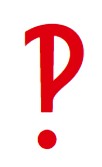
I shrugged that one off when I read it, because that was Elmore Leonard‘s rules for writing.  But it was always in the back of my mind. If I saw a “!” in my own writing, it’s life expectancy would be very short. (“Very” is another writing tic I’ve talked about before. Like everything else, it’s here because it works.) If I see it in editing, with one exception, I usually will flag it and tell the writer to take it down a notch. 

But while Elmore disdained the !, one must remember it was how he wrote. He also had a Stephen King-like disdain for adverbs. Unlike Steve, Elmore actually stuck to it. I’m getting King’s Never Flinch when it comes out, so I may do an adverb count. But while I don’t share Elmore’s contempt for the !, I do get it. 

For starters, with one very notable exception (Hi, Nathan!), I will mercilessly zap all instances of “!!” or “!?” Also, unless it’s for effect, it should be clear a character is shouting without putting an exclamation point at the end of every line of dialog the character speaks. Remember, someone has to read this, and as always, if it annoys the reader, your book is a DNF, a cute little abbreviation for “Did not finish.” (StoryGraph, an alternative for Goodreads, even has a status for this in addition to Want to Read, Reading, and Read. Bezos, you own Goodreads. Take note.)

But what was that other thing I just did? “!?” That, my friends, is the much maligned interrobang, which has long since been replaced by the acronym “WTF,” often spelled out or replaced with a similar phrase. There’s even a symbol for it with two html codes to render it. ‽ That might be hard to see with this font, so here’s an image from compart.com explaining the technical details:

The interrobang

If “WTF” were punctuation, this is what it would look like. But the interrobang never really caught on, mainly because it’s a comic book construction. Now, comics and graphic novels have their own rules, just like 73X7ing, lol. In prose, this really doesn’t quite cut it. But whoever came up with the interrobang deserves credit for trying. Still, readers find it distracting. The question mark (?) isn’t as scrutinized because we only use them to ask a question. In fact, they’re missed more than overused because some questions are not asked with the pitch of the voice going up. If, like me and a lot of other writers, you “hear” what you write, then a question (almost always in dialog) asked with a voice drop tells another part of your brain, “Hey, this is a period at the end.” I put in more question marks than I take out.

The !, or bang as it’s been called since the early days of computer programming, has a bad reputation because it gets abused. Like semicolons and em dashes*, they can get distracting. The former is because they’re so seldom used and often are more associated with computer code. Java and C# (and SQL, though I refuse to use them in SQL) use semicolons to end commands. Em dashes are a Gen X and Millennial tick, which has resulted in ChatGPT getting a migraine when users tell it to STOP USING SO MANY EM DASHES! I wont’ get into the ethics of how ChatGPT learns, but suffice it to say, we GenXrs and Millennials are baking our bad habits into cyberspace.

Normally, I have rules applied mainly to crutch words: One instance per page unless unavoidable. (“Just” is a nuisance word and hard to weed out as I end up putting back a third of what I cut.) For the exclamation point, I’ll restrict that even more. First, memorize Leonard’s rule: one bang per 100,000 words. And when you or your publisher send me your manuscript, understand, while I may be more lenient than Elmore Leonard, I still restrict it to one per chapter. Maybe one every three, since short chapters are the norm now.

*You can have my em dash when you pry it from my cold, dead–and lifeless–hand.